Osteopathy


Modern osteopathy is continually evolving in response to all the scientific research and development behind it. However, as osteopaths develop their clinical expertise, their treatment style will evolve towards a more personalised view of how our bodies work and how to treat the various dysfunctions that affect our bodies.

There are various styles of osteopathic treatment and while some osteopaths will take a holistic view of all, others will concentrate on only one or two. In the case of our main osteopath - Moisés Ferrández - he has studied each of the different styles and uses them in integration, depending on the dysfunctions that each patient may present.

Types of Osteopathy
Structural Osteopathy
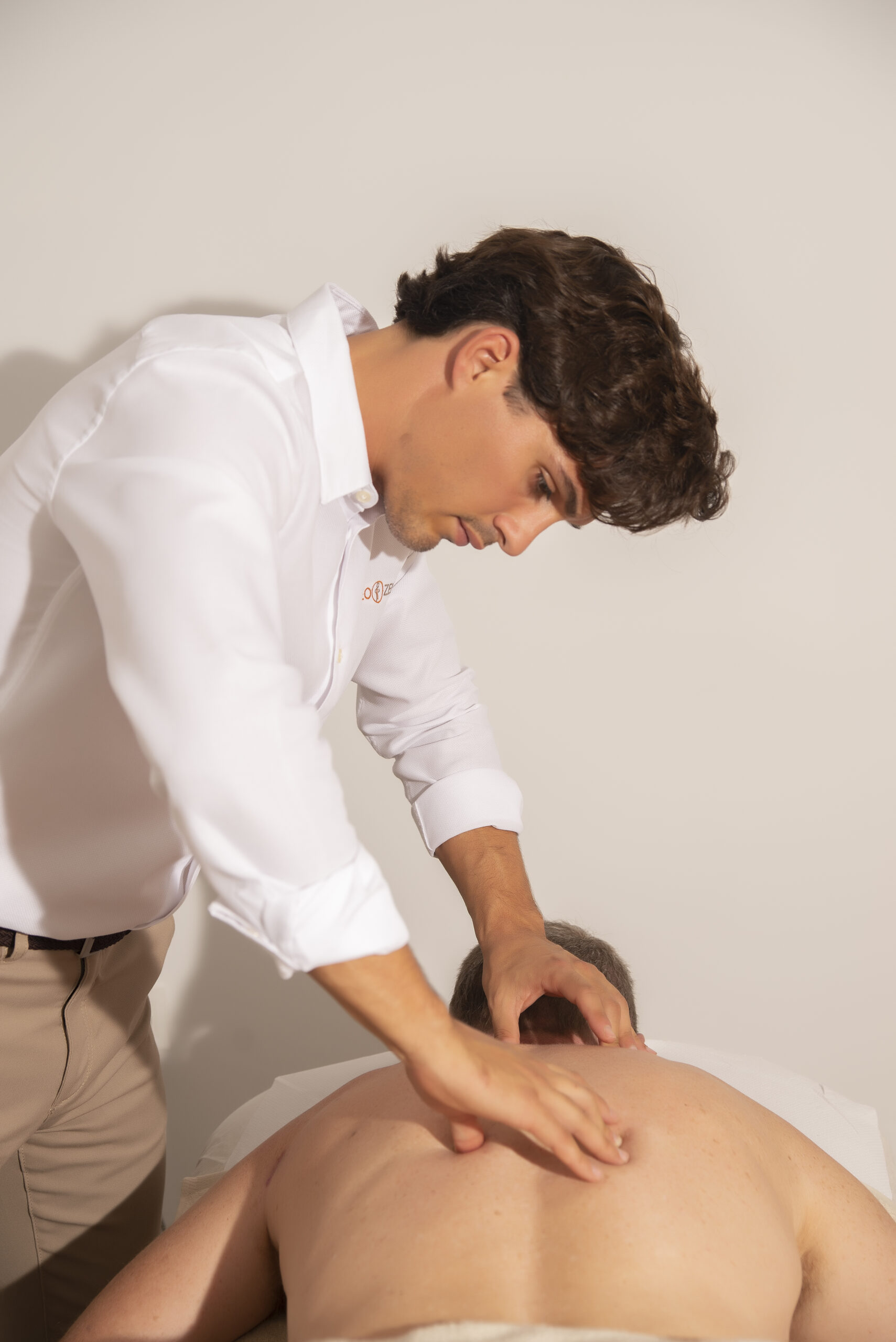
This is the most common approach to osteopathic treatment and is the foundation upon which modern training is based. It is where the osteopath will use different manual techniques to affect the musculoskeletal system: Joint mobilisation Articular manipulation Muscular, ligamentous and fascial release Stretching the shortened tissues Strengthening of weak structures And many more. The treatment effect can reach into the body and help the nervous system, blood supply or organ function.
Visceral Osteopathy
Visceral Osteopathy is an expansion of the general principles of osteopathy which includes a special understanding of the organs, blood vessels and nerves of the body (the viscera) This approach looks at the relationship between the physical structure of the body and the organs, such as the digestive tract or respiratory system. It´s aim is to relieve imbalances and restrictions in the interconnections between the motions of all the organs and structures of the body. Through the stresses imposed by poor posture, diet or lifestyle pressures, the organs can build areas of tension which can then lead to referred ‘viscero-somatic’ pain. One example of this is the intense groin pain created by an acute kidney infection. In this case treatment over the area of pain may be ineffective whereas direct manipulation of the kidney may stimulate the healing response needed to relieve the pain. Visceral treatment can aid movement of the digestive tract and good function of abdominal organs as well as the lungs, which will directly affect at the way our organism function´s as a whole Visceral Osteopathy is commonly used for: Swallowing difficulties * Digestive problems * Endometriosis * Colics * Breathing dysfunctions (Asthma) * Incontinence * Back and neck pain * Ribs and thoracic cage pain * Circulation problems And many other conditions
Cranial Osteopathy
This is a more subtle approach which involves a gentle ‘hold’ of the patient to interact with more subtle energies and the body’s fluid dynamics. Tiny physiological movements in the bones in the head and face are vital for health, and cranial osteopathy can focus on any obstructions to these microscopic movements that may have been caused by trauma or injury. Cranial Osteopathy works with the body’s involuntary mechanisms, helping to restore a calming balance to natural bio-rhythms by means of a gentle “hold” of the patient. It encourages the release of stresses and tensions throughout the body. It is common for us to feel that when we experience physical or emotional stress, our body tissues tend to tighten up. Although our bodies are generally able to adapt to stress at the time, a lasting strain may remain. Any remaining tension may be held in the body and can restrict its free movement. As time goes by, the body may find it more and more difficult to cope with accumulated stresses and eventually symptoms may develop. Over time, the body may find it increasingly difficult to cope with the accumulated stresses and eventually symptoms may appear.
OSTEOPATHY

WHAT WE TREAT?

Fusce ut velit laoreet, tempus arcu eu, molestie tortor. Nam vel justo cursus, faucibus lorem eget, egestas eros.
TESTIMONIALS

What do they say about us?